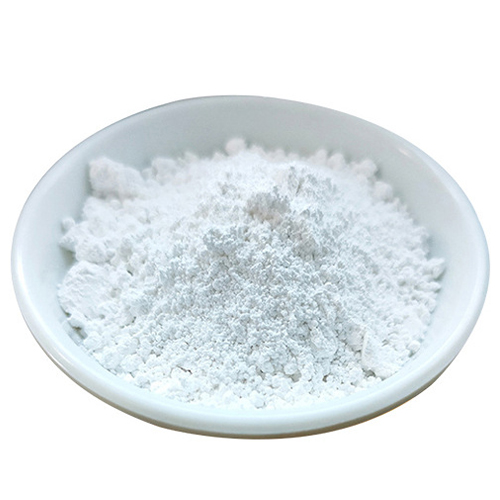


Gibberellins are a class of plant hormones that can promote plant growth and have a gibberellin alkyl ring structure. It exists in both free and bound forms. Generally, there are at least two or more gibberellins in plants, and different gibberellins can be transformed into each other. Young tissues of leaves, buds, roots and immature seeds are the main sites of gibberellin synthesis. It has physiological effects such as promoting stem elongation, inducing bolting and flowering of long-day plants under short-day conditions, breaking dormancy, promoting fruit setting and parthenocarpy, and cell division and differentiation. The most significant effect of gibberellins is to promote tissue growth and significantly increase plant height, especially for some genetic dwarf plants. Gibberellin can replace red light to stimulate dormant seeds (kidney beans, lettuce, etc.) to germinate; it can induce the synthesis of α-amylase to hydrolyze starch into sugar. This extremely specific reaction has been used for the biological identification of gibberellin, and has been used in beer production. In the beer industry, GA3 is used to promote the germination of barley seeds, which saves food, reduces costs, shortens production cycles, and ensures The role of beer quality. Treatment of maize plants with high concentrations (500-1000ppm) of gibberellin can lead to partial or complete male sterility. This is very beneficial to the breeding of maize inbred line hybrids. Under low temperature and weak light, gibberellins can break the dormancy of forage grass, which is beneficial to green manure cultivation; under drought or low temperature in summer, it can promote the growth of sugarcane; under low temperature in early spring, it can promote early germination and rapid emergence of peas and beans. Gibberellin is commonly used in agriculture to increase the yield of seedless grapes, break potato dormancy, and is used in hybrid rice seed production to promote heading and increase hybrid seed yield.
Caraterísticas de Ácido giberélico
Gibberellin is a plant growth hormone, which can promote the growth of stems and leaves, early bolting and flowering, promote germination of seeds, tubers, and tubers, stimulate fruit growth, increase fruiting rate or form seedless fruits, etc. Potatoes, tomatoes, rice, Wheat, cotton, soybeans, peas, tobacco, fruit trees, etc. all have the effect of increasing production. However, if too much gibberellin is applied, the plants will have yellow and slender branches, that is, chlorosis and excessive growth, which will affect the yield instead. Gibberellins are also used to make malt from barley. It also promotes the development of insects.
Applications of Gibberellic acid
Improve the yield of three-line hybrid rice seed production: this is a great innovation in hybrid rice seed production in recent years, and it is an important technical measure. For example, Jianhu County, Jiangsu Province has 100,000 mu of breeding fields and seeding fields. It is the national hybrid rice seed production base, and the yield per unit area of gibberellin has been significantly increased. Gibberellins can adjust the flowering period, reduce neck wrapping, promote earing of the parents, increase the exposed rate of stigma, increase the number of effective ears and grains, increase the rate of seed setting, and significantly increase the yield. Generally, the leaves are cut when 5% of the female parent is heading, and the gibberellin is sprayed after the cutting, and sprayed 3 times in 4 consecutive days, all of which are sprayed by the parents, and 15-25 grams of 4% gibberellin dosage is used per mu. Spray 20 kg of water for the first time with a low concentration and then with a higher concentration. In addition, it can be used for seed dressing, seedling dipping and spraying in rice planting.
Promotes seed germination. Gibberellin can effectively break the dormancy of seeds and tubers and promote germination. Treating potatoes with 0.5-1 mg/kg gibberellin solution can break dormancy and is suitable for second-season cultivation of potatoes. Some seeds that require low temperature to germinate (such as peach, hazel) or seeds that require red light to germinate (such as some lettuce varieties), treatment with gibberellin can replace low temperature or light conditions to promote germination. Gibberellins are now used in the brewing industry. Treatment of non-malting barley with gibberellin can promote the activity of α-amylase. This can save food and increase beer production.
Accelerates growth and increases yield. Gibberellic acid GA3 can effectively promote plant stem growth and increase leaf area, thereby increasing yield. For example, spraying sugarcane with 200ppmGA3 can promote the elongation of sugarcane stalk and increase the yield of sucrose. Spraying spinach, celery, green vegetables and other vegetables with 20-40ppm GA3 can increase the size of the leaves and make the stems fat and tender.
Promotes flowering. Gibberellic acid GA3 can replace the low temperature or light conditions required for flowering. For example, for camellias, azaleas, violets, pansies and other plants that need to be induced by low temperature for flowering, after treatment with 100ppmGA3, they can flower under non-induced conditions. For most long-day ornamental plants, such as geraniums and cyclamen , Dianthus, dahlia, etc., spraying with 10-100ppm GA3 can replace the required long-day conditions and promote flowering.
Increase fruit production. Grapes, apples, pears, jujubes, etc. are sprayed with 10-30ppm GA3 in the young fruit stage, which can increase the fruit setting rate.
Pacote de Ácido giberélico
Também fornecemos alguns acessórios para
acrescentar mais funções para conveniência dos utilizadores finais, o que também ajuda os nossos distribuidores e parceiros comerciais a vender
os nossos produtos na sua área. Se tiver alguma necessidade especial de embalagem, não hesite em contactar-nos.
Embalagem grande:
Sólido: Tambores de fibra de 25Kg com aprovação UN e revestimento LDPE;
Líquido: bidões de PEAD ou de ferro de 200L com aprovação da ONU.
Embalagem para venda a retalho:
Solid: 10g;50g;100g;500g;1kg;5kg;25kg
Especificações técnicas
|
Name |
Ácido giberélico |
| Fórmula |
C19H22O6 |
|
MolecularWoito |
346.38 |
| EINECS N0. |
201-001-0 |
|
Melting Pponto |
227 °C |
| Ponto de ebulição |
401.12°C (rough estimate) |
|
Estado físico |
crystallize powder |
| Cor |
Branco |
|
Pureza |
|
| Embalagem |
25kg Cardboard barrel |
|
Aplicação |
Agricultura |
| Sarmazenamento |
Powder in plastic bags and water in brown glass bottles. Store in low temperature and dry place. |
|
Samplo |
Disponível |
| EXP |
2 anos |